


Fun Facts: How Beer Is Made ?
Jan 01, 2018
"Ever wonder how four basic ingredients—barley, water, hops, and yeast—transform into your favorite beer? The core secret is simple: extract the sugars from the grains so the yeast can turn it into alcohol and $CO_2$. Here is exactly how it happens in 5 steps."
Step 1: Malting
"It all starts with harvested grains—usually barley, though sometimes wheat or rye. These grains undergo a precise process of heating, drying out, and cracking. The main goal here? Isolate the essential enzymes needed for brewing so they're perfectly primed for the next stage."
Step 2: Mashing
"Next up is mashing. Grains are steeped in hot, but not boiling, water for about an hour—think of it sort of like making tea. This activates those isolated enzymes, causing the grains to break down and release their rich sugars. Once drained, you're left with a sticky, sweet liquid called wort. It’s basically unmade beer—just like dough is unmade bread."
Step 3: Boiling
"That sweet wort then goes into a rolling boil for about an hour. During this intense boil, hops and other spices are added several times to build flavor, aroma, and bitterness."
Step 4: Fermentation
"Once the hour-long boil is complete, the wort is cooled, strained, and filtered straight into a fermenting vessel where yeast is finally introduced. At this point, brewing ends and the fermentation magic begins! It's stored for a couple of weeks at room temperature for ales, or many, many weeks at cold temperatures for lagers. The yeast gets to work, eating up all that sugar in the wort and spitting out alcohol and CO2 as waste products."
Step 5: Bottling & Aging
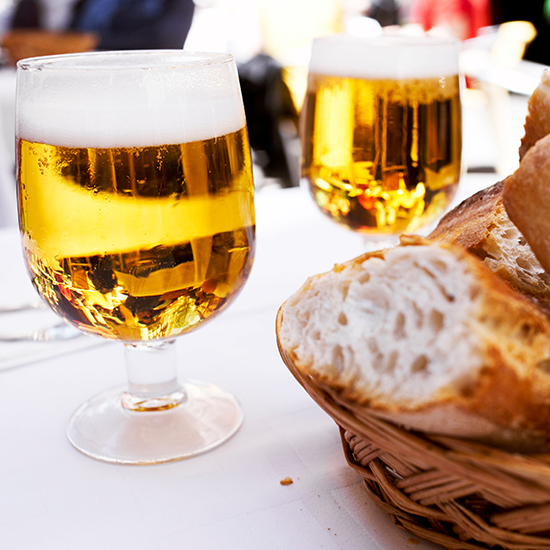
"You officially have alcoholic beer—but it’s still flat and uncarbonated. After bottling, it is either artificially carbonated like a soda, or 'bottle conditioned' to naturally carbonate via the CO2 the yeast continues to produce. After aging anywhere from a few weeks to a few months, it’s finally time to drink. Open it up, pour, and enjoy—it’s delicious!"